

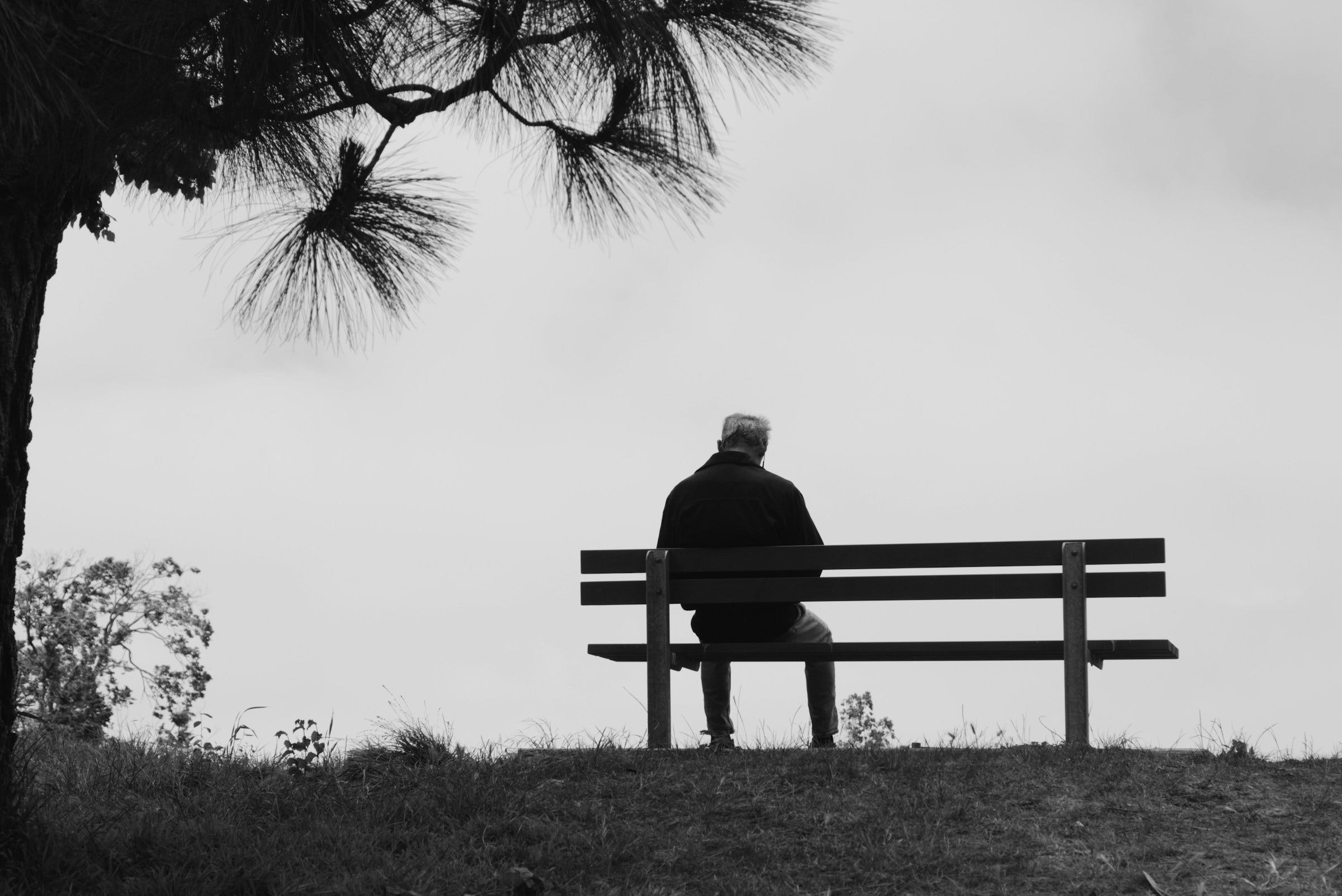
A while ago, in “Rising from the canvas,” I mentioned in passing that senior leadership is designed-in lonely. I said friendship had been the casualty of forty years in executive roles, and that I’d come back to this another time. Some of you wrote back. A couple of you wrote back at length. So here is the other time. This is the post I was avoiding when I planted that flag.
The facts first.
Some years ago now I stepped out of full-time work, and out of the marriage twelve months after that, with almost no friends to speak of. I don’t mean I didn’t know anyone. I knew a great many people. My LinkedIn was a monument to forty years of acquaintance. But in the sense of men I could ring at nine in the evening and say I’m not coping, can we talk, there was nobody I would actually have rung. One or two I might have, at the outer edge of what was possible, but the call would have surprised both of us, and I am not sure either of them would quite have known what to do with it.
That is what I mean by almost no friends. Not nobody in the world — nobody in the position where such a call would have been ordinary. The absence of anyone in that position became unignorable when the marriage I had organised my entire emotional life around dissolved in a single conversation.
How does a life arrive there?

Partly by structure. When you run an organisation, every relationship inside it is shaped by the fact that you hold the power. People want things from you. Good people, reasonable things, usually — but still. The friendships I thought I’d built across fifteen years of leadership turned, when I stepped out, into something quieter. A few held. Most didn’t. Some — this stung more than I was prepared for — turned out to have been transactional all along, and declared themselves so once the transaction closed. That isn’t a character flaw in the other person. It’s what hierarchy does to intimacy. You can’t easily be friends with someone whose bonus you approve.
Partly by exhaustion. The hours I gave to Qatar, to the executive role before that, to the one before that — there was nothing left in the tank for the unscheduled pint, the long walk with someone who wasn’t a colleague, the evening phone call that goes somewhere. I told myself I’d pick it up in retirement. I didn’t understand yet that friendship, like a garden, can’t be recovered by a burst of weekend effort. It has to have been watered all along.
Partly by the couple. We were close, my wife and I, for a long time. I put almost all my emotional weight on one beam. This is not something I say with regret exactly — it made possible many of the best years of my life — but it is something I understand now as a structural choice, not just a fact of love. Two people who find everything they need in each other build, without meaning to, a house with only two rooms. When one of them leaves, the other is standing in a very small space.
Partly, and this is the layer I find hardest to write, by temperament. I am, by default, a self-sufficient man. Leave me with books and the long view up to May Hill and I’ll be fine for a week. Reaching out has never been my instinct. The writing life has rewarded this; I have mistaken my isolation for discipline more than once. Depth over breadth has always been my preference in friendship, which means that when the deep friendships thinned, I didn’t have the wider thicket to catch me.
None of this is special. I know that.
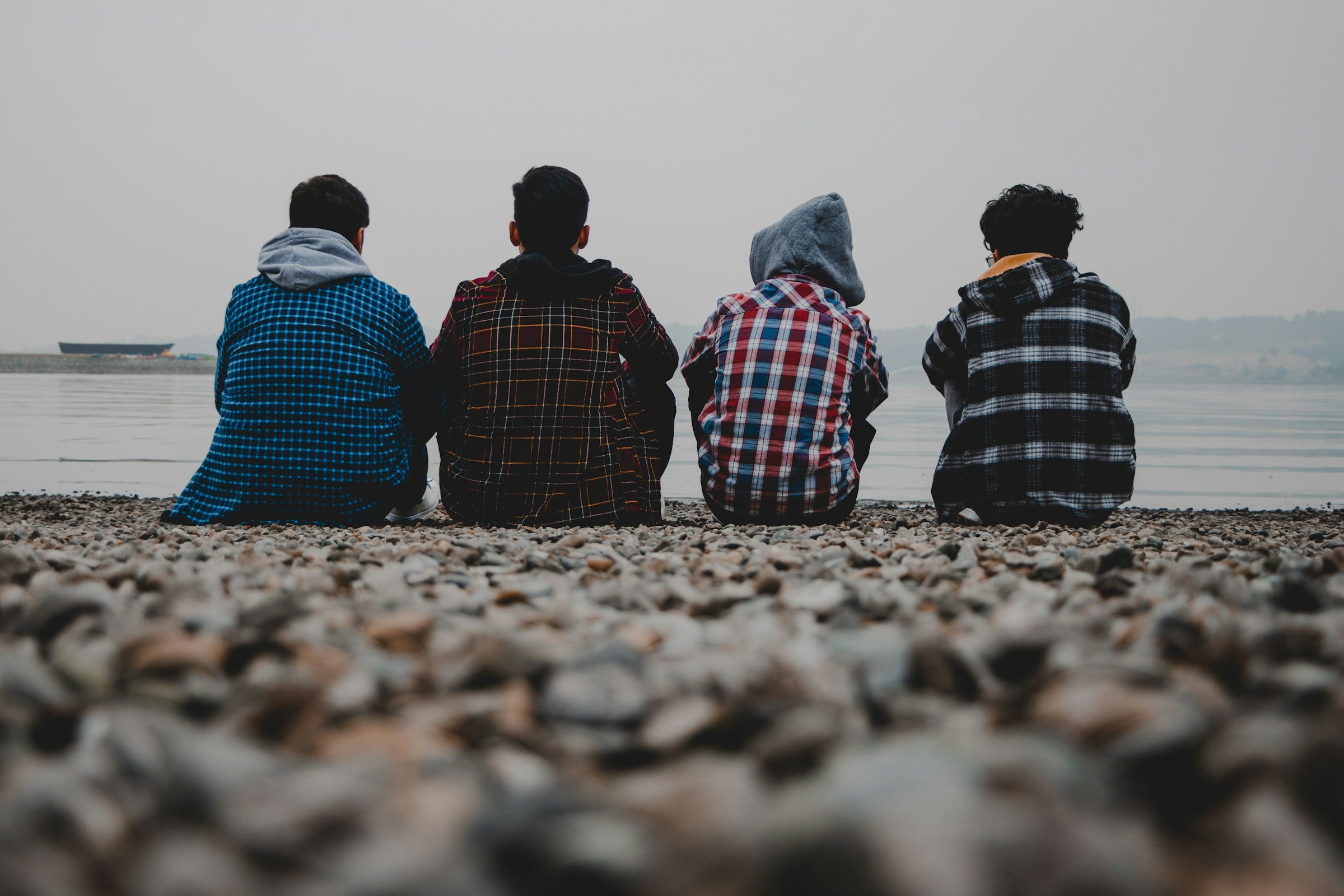
I have, since then, read some of the literature on male friendship in midlife, and what is most striking about it is how little novelty any of us possess. Surveys in Britain and the United States consistently find that men over fifty have fewer close friends than any other adult cohort, and that the number has been falling for thirty years. Niobe Way, the American psychologist, has written beautifully about this — how boys in early adolescence speak of their male friendships in the language of love, and how by late adolescence most of them have learned to withdraw from that intimacy and call the withdrawal maturity. We grow into the very loneliness we then complain of.
I find this both a relief and an indictment. A relief because it means the shape of my life is not the result of some private failure of character. An indictment because it means I walked, eyes open or not, into a pattern that was perfectly well-documented, and could have been resisted.
I’d like to tell you I fixed this. I haven’t fixed it. What follows is reporting, not advice.
The first thing I tried was the obvious thing. I rang the old friends — the ones who had fallen off when I went abroad, or when the children were small — and I suggested meeting. Some of those calls landed well. One of them became, quietly, something I now depend on. Most of them were like trying to restart a fire in wet wood. We got a few sparks and a lot of smoke. We had both changed in ways the other hadn’t witnessed, and affection without shared life turned out to be a thinner thing than I’d assumed. I don’t think we were wrong to try. The lesson was simply that old friendship needs to have been maintained, not resurrected.
The second thing I tried was more deliberate. I joined things. A nature group, briefly. Then, more seriously, a local climate action group — not because I thought I’d find friends in it, but because I’d grown tired of reading the science and doing nothing with it, and because the people who bothered to turn up on a February evening seemed to me the kind of people worth standing next to. There is a particular awkwardness — perhaps it is only my awkwardness — in contriving intimacy by appointment, which is why I didn’t join anything explicitly social. I have come to think that men don’t, on the whole, befriend each other through honesty. We befriend each other sideways, through something else we are both doing.
Which is how the unexpected thing happened, twice.
The first was the climate group itself. Two people a little older than me — both already a decade or more into a retirement I was only beginning — turned out, over the course of a few months, to be the beginnings of real friendship. Neither of them sought me out, and I didn’t seek them. We arrived at each other sideways, through the work of the group. The age gap, which I noticed at first, has quietly ceased to matter. Friendship across a decade or fifteen years is a different animal from friendship at parity — slightly more spacious, perhaps, in ways I am still learning to read.
The second was poetry. I had started, the year before, writing seriously. Submitting to journals. Going to readings, joining a poetry community I hadn’t known existed. Signing on to do the MA in writing poetry at the Poetry School. Without setting out to make friends, I found I was in correspondence with people whose company I valued. A poet in Newport who reads my drafts and sends me his. A handful of readers — strangers, technically — who write to me after posts like this, and with whom I have ended up in exchanges that have the quality of friendship in everything but the face-to-face.
I had not expected either thing to do what it has done. I had entered the climate group to be useful, and the poetry as a solitary pursuit, and both have turned out to have a secondary life as a small network of real affection. I think it is because they are practices in which the first requirement is honest attention — to the science, to the page, to the world each of them points to — and once two people have established that habit between them, friendship follows more or less of its own accord. What I needed, it turned out, wasn’t to try harder at friendship. It was to find things worth doing with other people, and to let the friendships grow out of the doing.
So where am I now. Not resolved. The pattern of forty years doesn’t undo itself in three. The old habit — closing the door, declining the invitation, preferring my own company when I shouldn’t — still reasserts itself more often than I’d like. That hasn’t gone.
But something is beginning.
Nothing here yet has the weight of the friendships I lost, and I am not going to oversell what I have. Friendship dislikes being oversold, and what I am describing is still in its early weather.
But it is real. There are evenings now when I find myself looking forward to a conversation, or drafting a message to someone I didn’t know a year ago, or turning over something said at a meeting that is still working on me days later. Three years ago I had none of that. The shape of it is unfamiliar, and I don’t yet know quite what to call it, but it is unmistakably the beginning of something.
That is what I can honestly report. Not a victory. Just the small, corrigible fact that the door is open a little more often than it used to be, and that once or twice lately, someone has walked through it and stayed.