

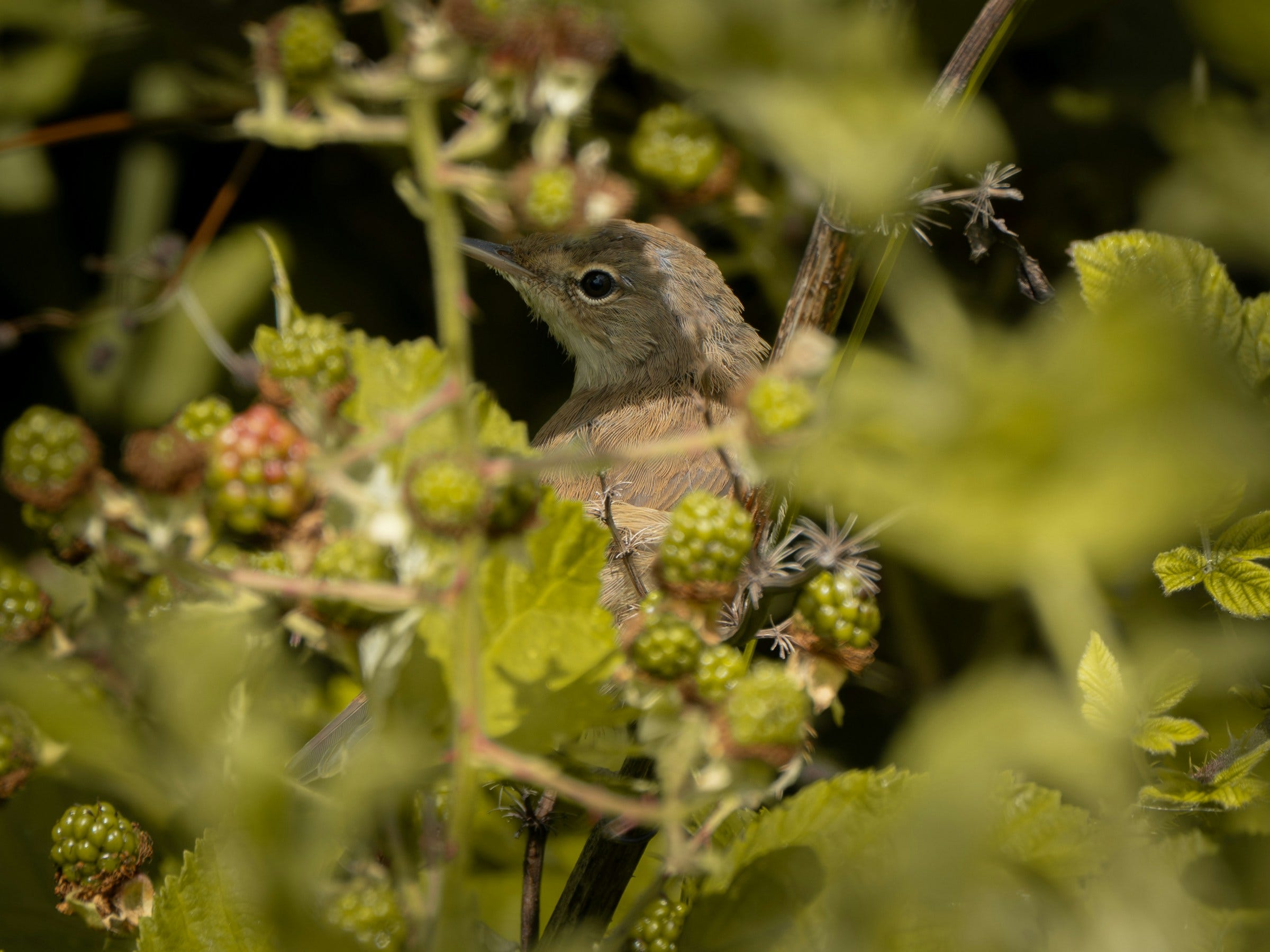
Photo by Suho Media on Unsplash
There were swifts over the rooftops last night — a low, screaming party of them, six or seven, scything the air above the lane in that way they have, as if the evening were a thing to be cut into ribbons. I stood at the gate and watched until the light went. They had come up from the south of the town, over the orchard, and they turned at the church and came back, and turned again, screaming the whole time, that high thin sound that is less a song than a kind of friction. I have been waiting for them since the first week of May, when one arrived and then was gone, and I half-thought I had imagined it. Now there is a colony of them, and the evenings have their proper noise.
It is the middle of June. On Sunday the year reaches its hinge — the solstice, the longest day, sunrise at twenty past four and the light not gone until nearly ten. We talk about it as a peak, and it is one. But the thing nobody tells you as a child, and the thing I find I keep having to tell myself as an adult, is that the longest day is also the day the light begins to go back. The solstice is not the top of the hill with a plateau beyond it. It is the top of the hill and then the path down. We have built our highest summer festival, our bonfires and our standing stones at Stonehenge, around the precise moment the days start shortening again. There is something in that I have never quite got to the bottom of.
The swifts know it before we do. Or rather, they are arranged around it so exactly that to watch them is to watch the turn of the year happen in front of you.
A swift is in this country for about three months. It comes late — later than the swallows, later than the warblers, arriving in the last days of April and through May, when it is sure the air will be thick enough with insects. And it goes early. By the end of July the screaming parties begin to thin; by the second week of August, in most years, they are gone, lifting off one warm night and not coming back until the following May. They winter in Africa, below the Sahara, and they get there the long way, and the round trip is something like fourteen thousand miles. For a creature that weighs less than a small bar of chocolate, this is not a journey. It is a way of life that happens to pause, briefly, over Herefordshire, so that the young can be raised in the eaves of our churches and the gaps under our roof tiles.
So the swift that is screaming over my lane tonight has perhaps six weeks left here. It arrived a fortnight before the solstice. It will leave a fortnight or so after it. Its entire English summer is hung, like a small loud bracket, around the very day the light turns. I find I cannot watch them now without that arithmetic running underneath. They are most here, most numerous and most vocal, in exactly the window when the year is already tipping away.
It is worth saying plainly what these birds are, because familiarity has worn the strangeness off them.
A swift does not land. Not on the ground, not in a tree, not on a wire like the swallows. Once a young swift leaves the nest it may stay airborne for two or three years before it ever touches anything — feeding on the wing, drinking on the wing, gathering nest material on the wing, sleeping, it is thought, on the wing, climbing to a great height at dusk and dozing in slow circles through the dark. It mates in the air. By the time it first comes to rest, in the eaves of some building it has chosen, it has flown a distance that would have carried it several times round the world. We share our houses with an animal that is, in almost every sense that matters, made of departure.
And it is leaving us. The swift is on the red list now — the most serious category of conservation concern in Britain. The numbers have fallen by better than half in a generation, partly because the insects have thinned, partly because we have tidied and sealed and renovated away the small dark gaps under the roofline that they need. A bird that asks of us only a hole the size of a fist, and gives back the whole high theatre of a summer evening, is being quietly evicted by our improvements. I think about this when I watch them. The impermanence is not only in their season. It is in their tenure.
The warblers and the swallows keep a gentler version of the same clock. The chiffchaff was first, back in March, two notes repeated in the bare wood before the leaves were out — its whole name a transcription of its song. The blackcap and the willow warbler came in April, the willow warbler with that soft descending cadence that Edward Thomas, who heard these same birds in these same border counties a century ago, kept trying to catch in words and admitted he could not. The swallows have been over the fields since the middle of April and will stay, some of them, into October. They have longer here than the swifts. But they too are visitors, hung on the warm months, gone when the insects go.
What they all have in common is that their beauty is not separable from their brevity. This is the thing I keep arriving at. The swift is not beautiful in spite of being here for only three months; it is beautiful, partly, because of it. The screaming over the rooftops is loud with the whole short summer in it. If they were here all year — if they hung about through the wet of November like the wood pigeons — we would stop looking up. It is the going that sharpens the seeing. A migrant bird is a lesson, delivered every year whether or not we attend to it, in the fact that the things which move us most are precisely the ones that do not stay.
I have spent a fair part of these last years learning, slowly and against my inclination, not to grasp at things that are leaving. It does not come naturally to me. My instinct, when something good is plainly temporary, is to start grieving it while it is still here — to spoil the present arrival with the rehearsed loss. The swifts will not let me do that. They are too fast, too loud, too entirely in their six weeks of August-bound summer for any of that elegiac nonsense. They insist on the evening they are actually in.
That, I think, is what the solstice has to teach as well, if we will let the longest day be what it is rather than what we wish it were. The light is already turning. It has been turning, in fact, since before the swifts arrived; it will go on turning while they fly south. None of that is a reason to stand at the gate in mourning. It is a reason to stand at the gate. To watch the birds cut the evening into ribbons for as long as the evening lasts, and then to go in, and to let them go when their night comes, knowing they will lift off without ceremony and that the eaves will be silent by September.
Beyond solitude, I have come to think, is partly this: the willingness to love what is on its way out without trying to make it stay. The swifts are over the lane again as I write. It is not yet the solstice. The light is still climbing. Everything is, very briefly, here.