

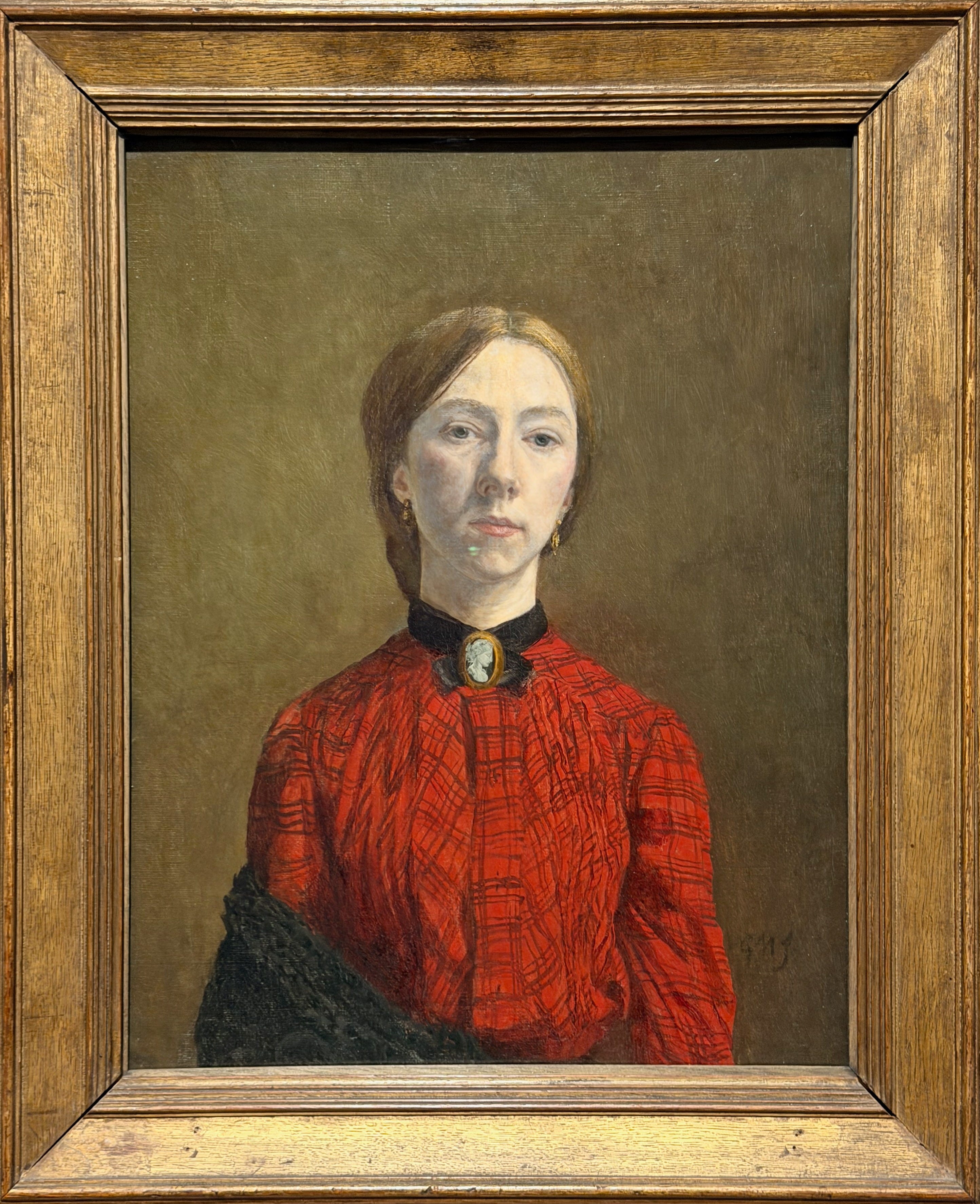
Gwen John: Self-Portrait c. 1902, Oil on canvas, Tate, Purchased, 1942
There is a room in this house where I go to work. It faces the wrong way for morning light, which is to say it faces the hill, and on a clear day I can watch the weather arrive over the ridge a good ten minutes before it reaches the window. I go in. I close the door. For an hour, or two, or on a good day three, I am alone with whatever I am trying to make, and the world is asked, politely, to wait.
I have been reading Sue Hubbard1 on the painter Gwen John (after visiting the Cardiff Museum exhibition), and thinking about that door.
John was born in Haverfordwest in 1876. Her mother, who liked Chopin and watercolours and was rarely well, died when Gwen was eight — the kind of early loss the psychoanalysts tell us reorganises a person from the inside, leaving them forever a little too ready to cling, a little too easily abandoned. She trained at the Slade, then went to Paris, to Montparnasse, to a furnished room she paid for by modelling for other artists. The streets below smelled of open drains and frying potatoes. Rilke, who was in the same quarter at the same time, said the area smelled of fear. She lived close enough to the poverty line to touch it. A frugal life at the top of a damp building, not enough coal, not enough to eat — Hubbard is right that we romanticise the attic now, and right that such a life took enormous inner resources to survive at all.
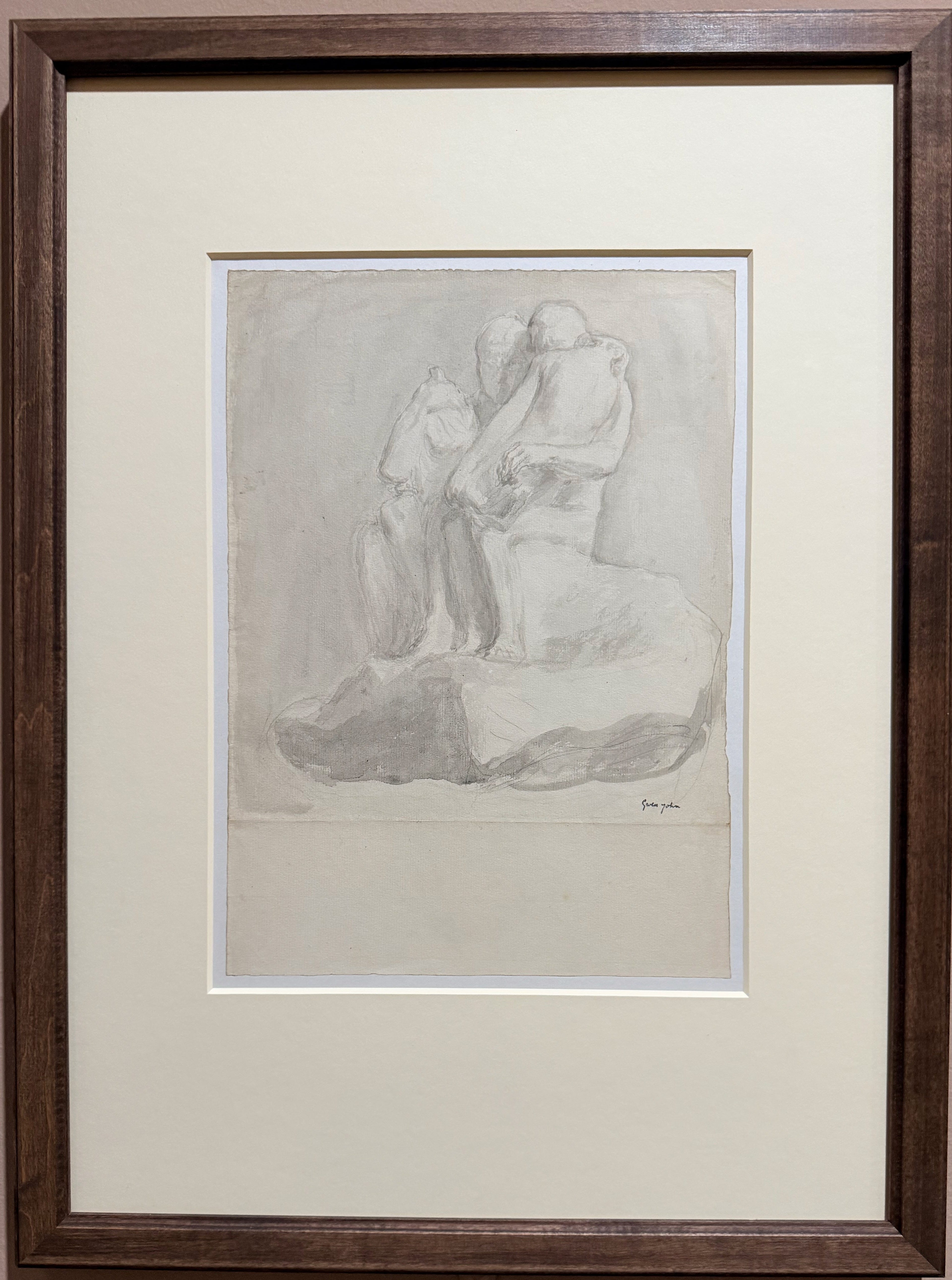
Gwen John: Study of Rodin’s sculpture, Death of Alcestis, c. 1899, Watercolour and graphite pencil on paper
Then she met Rodin, thirty-six years older and the most famous artist alive, and for a time she more or less stopped being a painter and became a supplicant. She waited in her room for him. She wrote him letters he did not answer. The more she wanted him, the more he withdrew, which is the oldest and most reliable mechanism of unhappiness there is.
And here is the part I keep returning to. In 1906 she moved to a new room in the rue St. Placide, and slowly, the room gave her back to herself. She began the series of quiet interiors and self-portraits she is now remembered for — La Chambre sur la Cour, the evening light, the borrowed harmonies of Piero della Francesca. Small works. A woman in a room, or a room with the woman just gone out of it. As if by painting the place where she was alone, she could find out who she was when no one was watching.
Ma religion et mon art c’est toute ma vie, she wrote later. My religion and my art are my whole life.
I think the room did something the man never could. The man was a hole she kept trying to fill. The room was a place she could finally make something in.
This is the old, unfashionable truth at the centre of Hubbard’s essay, and she draws it out through Anthony Storr and through Donald Winnicott before him: that the capacity to be alone is not a deprivation to be pitied but an achievement to be reached. Winnicott thought it began in childhood, in the experience of being alone in the presence of someone who could be trusted — alone, but not abandoned.2 Storr thought that for some people creativity does the work that other people’s company does for everyone else: it is where they go to meet their own depths.3 Elizabeth Bishop knew it young: as a schoolgirl she wrote a small essay — On Being Alone — asking why so many of us seem to dread being alone, when we had, she thought, half forgotten how.4 Rilke, writing his letters to a young poet in those same Paris years, told him not to be frightened by the part of himself that wanted to escape his solitude. It is good to be solitary, for solitude is difficult.5 The difficulty was the point. The difficulty was the work.
Being alone is not the same as being lonely. Loneliness is solitude with the wanting still in it — the room with Rodin’s absence in it, rather than the room with the painting in it. The well that creative work draws from is the second kind. You go down into it on purpose. You come back up with something.
I believe all of this. I have lived enough of it to believe it without having to take it on trust. The hour behind the closed door is the most reliably good hour of my day. Whatever attention poetry has taught me — to stay with the small particular, to let the thing be the thing and not a symbol of something more flattering — it taught me in that room, alone, with the door shut.
But I want to be careful, because Hubbard is careful, and because Gwen John herself shows me exactly where the care is needed.
At some point after Rodin she wrote, in a notebook, a list she called Rules to Keep the World Away.6 There were ten. Do not listen to people more than is necessary. Do not look at people. Have as little intercourse with people as possible. Talk as little as possible. Do not look in shop windows. Do not care for the opinion of people. She turned to the Church, then to near-seclusion, and a myth has grown up around her since — the holy recluse, the woman who rejected the world and let her health go and died, finally, having travelled to Dieppe with no luggage at all.
And I find I admire the room and I am wary of the rule.
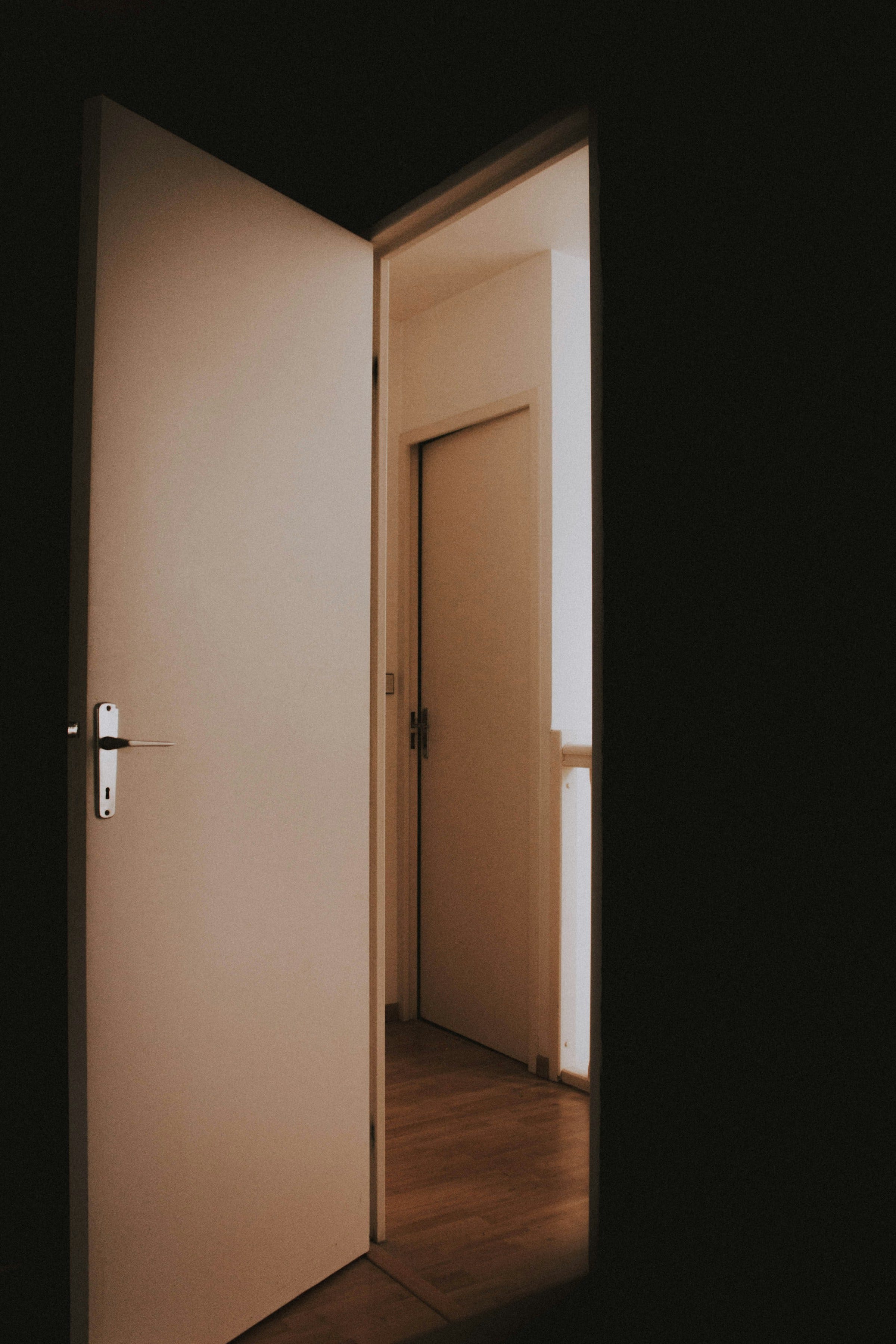
Photo by Mathias Reding on Unsplash
Because there is a door you close for an hour, and there is a door you lock for good, and they are not the same door, though they look identical from the outside. The first is a discipline. You go in to make the work, and you come out to live the life the work is for. The second is a wall with a person sealed behind it. The early loss, the unanswered letters, the slow hardening of alone into only — Gwen John’s solitude was, at least in part, a wound that had learned to call itself a vocation. The paintings are extraordinary. I would not wish the cost of them on anyone. I do not think the cost is what made them; I think it is what she had to paint her way through to make them at all.
So I keep the room and I refuse the rule. I go in, and the going-in is real, and necessary, and mine. But I have learned — slowly, and not always gracefully — to treat solitude as something you carry through a life rather than a place you withdraw into for the rest of it. A practice, not a destination. A door, not a wall. The well you lower the bucket into in the morning, and walk away from in the afternoon to go and be among the people who make the afternoon worth walking into.
This evening the weather came over the ridge as advertised — a grey curtain dragging up the valley, the hill going soft at the edges. I had got most of an hour’s work done. I read it over once, marked two lines for tomorrow, and did the thing the rule forbids and the room permits.
I stood up. I opened the door. I went back out into the rest of it.
God’s Little Artist. (n.d.). Seren. Retrieved 31 May 2026, from https://www.serenbooks.com/book/gods-little-artist/
D. W. Winnicott — “The Capacity to Be Alone,” paper read to the British Psycho-Analytical Society, 24 July 1957; first published in the International Journal of Psycho-Analysis, 1958, vol. 39, pp. 416–420; reprinted in The Maturational Processes and the Facilitating Environment (Hogarth Press, 1965). Key line: “The basis of the capacity to be alone is the experience of being alone in the presence of someone.”
Anthony Storr — Solitude: A Return to the Self (1988). Creativity as the meeting with one’s own depths; for some, solitary work does what intimacy does for others.
Elizabeth Bishop — “On Being Alone” (school essay, 1929), distinguishing being alone from being lonely and asking why we have forgotten how to be alone.
Rilke — Letters to a Young Poet, Seventh Letter (Rome, 14 May 1904), to Franz Xaver Kappus; trans. Stephen Mitchell (Random House, 1984). “It is good to be solitary, for solitude is difficult.”
Gwen John (biography, the rue St. Placide room, La Chambre sur la Cour, “Rules to Keep the World Away,” ma religion et mon art c’est toute ma vie, the death at Dieppe) — all from Sue Hubbard, God’s little artist.
Oh yes. Sometimes I am desperate for a closed door.