

Photo by Wallace Bentt on Unsplash
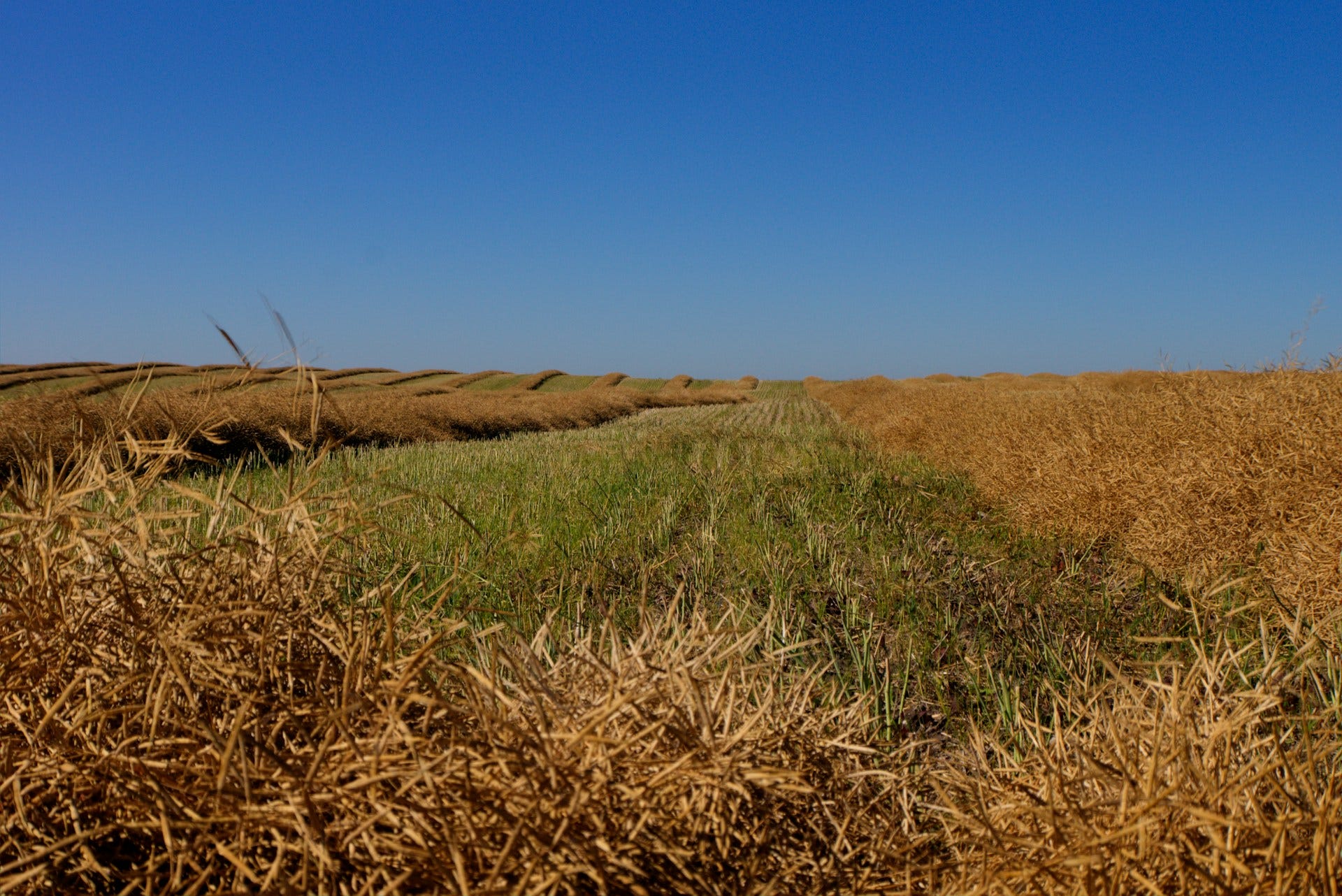
High summer in Herefordshire, and the land is holding its breath. The verges have gone lion-coloured, the fields were cut early and no aftermath has followed, the clay in the gate-gaps has opened into crazy-paving, and the Wye is running so low that it has started to show its bones — gravel shoals where there is usually a river. Eight areas of England are now officially in “prolonged dry weather”, the polite phrase for the stage before drought, and central England is in its longest run of dry days since 1995. It is a hard season to love and an extraordinary one to look at — because a dry year takes things away from the land, and everything it takes away discloses something. All three of this week’s finds know that.
1. A poem to enjoy — Alice Oswald, “Dunt: A Poem for a Dried-up River” — Oswald took as her starting point a small Roman carving of a water nymph found in Gloucestershire, and set her the impossible task the title announces: to summon a river — the little Dunt — out of dry limestone. The poem proceeds by failure; again and again the nymph tries and the instruction comes back to try again, and the river arrives, when it arrives at all, as barely a trickle in a ditch. It won the Forward Prize for best single poem in 2007, and it reads this month like reportage.
2. Art work of the week — Richard Long, A Line Made by Walking (1967), Tate — In June 1967 a 22-year-old art student took a train out of Waterloo, got off in the fields, and walked back and forth in a straight line until the pressed grass caught the light. Then he photographed it and went home. That is the entire work, and it changed sculpture: the land itself as the recording surface, a mark made of nothing but repeated attention. I have thought about it all week, because a dry summer turns the whole country into Long’s field. The ground has stopped forgiving. Every footpath is scorched into the grass; every desire line across the park is written in brown; and from the air, the parch marks are coming up — Roman foundations, lost gardens, filled-in moats, ghosting through the stubble as the grass above them starves first. The land in drought remembers everything that was ever done to it. Long’s line lasted a few days and survives only as a photograph; what the drought is showing us has waited under the fields for two thousand years for a summer dry enough to be seen in.
3. Music I sat with this week — Gustav Holst, Egdon Heath: Homage to Hardy (1927) — Holst walked Hardy’s Dorset before writing this, and put on the score a sentence from The Return of the Native describing the heath itself: a place perfectly accordant with man’s nature — neither ghastly, hateful, nor ugly … but, like man, slighted and enduring. The music is as dry as the ground it honours — a slow tread of muted strings and lonely brass, no pastoral sweetness anywhere, fourteen minutes of land that owes you nothing. Hardy died on 11 January 1928, three weeks before the premiere in New York on 12 February; a passage from the novel was read aloud in his memory before the orchestra played, and Holst conducted the British premiere the next day in Cheltenham, the town where he was born. The public never warmed to it; Holst maintained to the end that it was the best thing he ever wrote. This is the season to hear why. It is not music about the land at its loveliest. It is music about the land when everything easy has been taken away — slighted and enduring — and it sounds, this month, like the fields look.
A question for you — what has the dry weather uncovered where you are? The ghost of an old path across the lawn, the pond’s true floor, a river showing its gravel, a mark in a field you’d never noticed? Reply and tell me — I read every one.
A thought from me — a poet praying for rain at the root, a walker whose art existed because grass remembers pressure, a composer honouring ground that endures being slighted. What the three share is a hard kind of respect: none of them asks the land to be lovely. A dry year is the landscape’s via negativa — it tells you what was always there by taking away what usually hides it. The river shows its bed, the field shows its Roman bones, the poem shows the prayer under the argument. The toll is real, and I don’t romanticise it: the fish are struggling and the farmers are counting the cost. But if attention is the one form of keeping we’re allowed, then this is a summer that rewards it strangely well. Look at the land while it is telling the truth. And hope, with Hopkins, for rain.
Adam
"The land in drought remembers everything that was ever done to it." What a powerful insight, Adam.
That poem is incredible