

A few weeks ago, on a late April morning, I went up the hill I have walked perhaps twenty times since I came to live here. The light was the thin, washed light of a spring day that hadn’t yet committed to warmth. The ground was still damp from overnight rain. The blackthorn was almost done; the hawthorn just starting.
About two-thirds of the way up, where the path skirts a field of barley coming through in pale green lines, I heard it. A dry, wheezy sequence — short, short, short, long — from somewhere in the hedge. I stood still. A yellowhammer. It came again, and then I saw him, halfway up a blackthorn, the chrome-yellow head catching the sun. A little bit of bread and no cheese, as my school friend’s Dad used to render the call; though it sounds to me more like a small mechanical thing attempting language and not quite getting there.
I watched him for a long time. He sang, stopped, shifted a branch, sang again. I cannot say how often in the last five years I have walked hills like this one. I had not, in all that time, heard a yellowhammer.
I walked on. The song continued behind me, thin and patient, as if he had always been there.
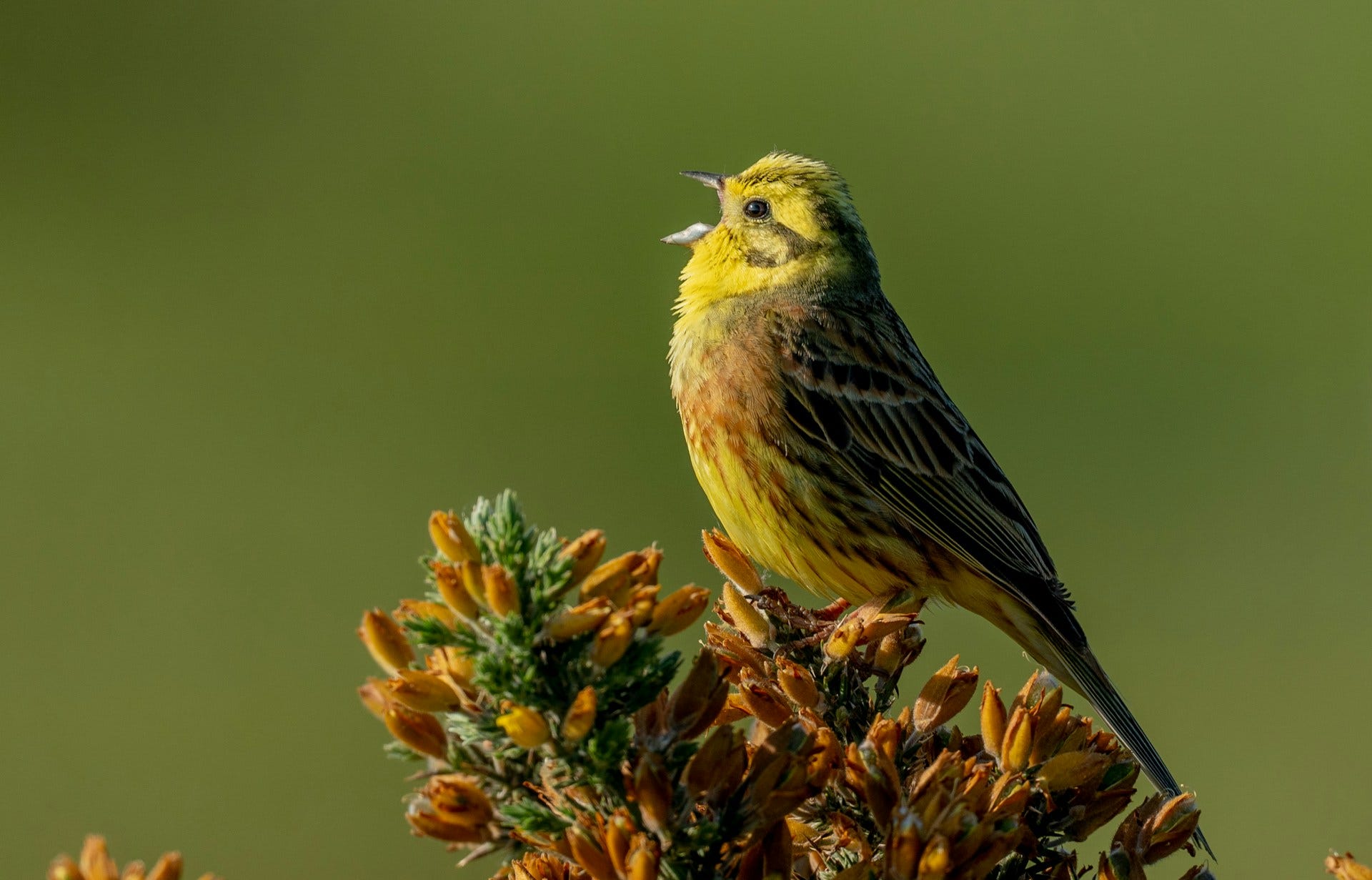
Photo by Bob Brewer on Unsplash
I have written once before, in “Travel and return,” about a walk up a different hill. It was December. I had recently come back from Qatar. The separation was very new. I went up in a grey drizzle to try to feel what I had missed for eight years. The landscape, when I got to the ridge, felt empty. Three magpies. A few crows working the ploughed field. A buzzard turning slowly over the far wood. And underneath all of it, a silence I could not quite name.
I wrote at the time, I remember, that the country I had longed for from Doha was not the country I was now standing in. I thought I meant something psychological. I meant something psychological, in part. But I am not sure I fully understood, then, that the emptiness was also literal.
The curlews are gone from these fields. I have not heard one in years, only see them now on the mudflats near Newport. The lapwings are gone; I have not seen their tumbling display over the wet meadows since I was a boy in the seventies. The yellowhammers had gone, or mostly gone, so quietly that I had not noticed their absence — which is perhaps the worst form of loss. The hill I had returned to was not the hill of my memory. Some of my grief that afternoon was for my own life. Some of it, I now think, was for the life of the place itself.
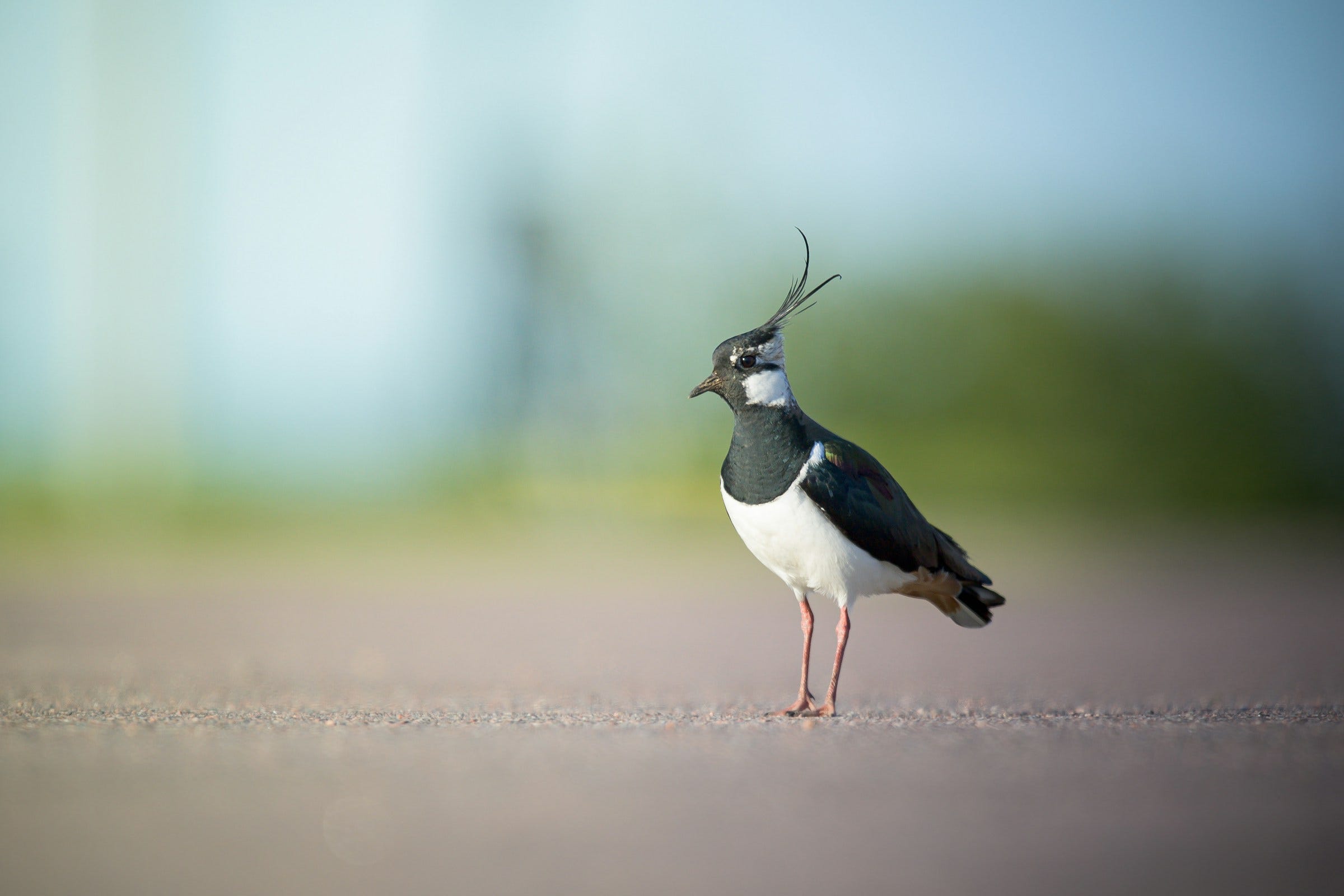
Photo by Daniil Komov on Unsplash
I have thought a lot, since then, about ecological recovery and about personal recovery, and how much the first has taught me about the second.
Ecological recovery, if it happens at all, is slow. It rarely returns a landscape to the state it was in before the damage. What comes back is not quite what was lost. Species that were dominant may become rare; species that were absent may colonise. The soil organisms shift; the relationships reorganise. The ecosystem that succeeds recovery is a new ecosystem, bearing a family resemblance to the old but not, strictly speaking, the same thing. It takes whatever time it takes. It cannot be hurried by wanting it.
And personal recovery, it turns out, is shaped rather like this.
The life I lost was not the life I got back. My marriage did not reconstitute itself. My career did not resume. The house I had grown up assuming I would grow old in was someone else’s house. What came back, instead, was a slightly different ecology: new friendships, none of them replacements for the old ones; a writing practice I had not had time for in decades; a relationship with solitude that I had previously confused with isolation. I did not get my old life. I got a life that had grown in its place, colonising the ground the old one had stopped holding.
It took me longer than I wanted to recognise this. I spent, as I have written before, a fair amount of that time looking online at houses I was never going to buy, looking in my address book for friendships I had not maintained, looking in the mirror for a version of myself who no longer existed. I was looking for what had gone. Recovery did not begin until I started, instead, to pay attention to what was arriving.
The yellowhammer is not alone. If I tell you what I have seen on this hill in the last few monhs — not unusual things, but things I had not seen — it reads like a small bulletin.
A little egret fishing the brook at the bottom of the lane, in February, when they used not to be here at all. A stonechat working a gorse bush on the common, which I had previously associated with coastal walks in Cornwall. A hare, twice, in a field where I cannot remember there having been hares. A scatter of cowslips in a bit of meadow the council has agreed to stop mowing until July. Orchids last summer, which the older farmers said had always been there and the younger ones said had not.
Some of these are climate. Some are conservation. Some are the slow effect of a few people locally paying attention. None of them amount to restoration. But they are arrivals, and they are visible — if you have learned how to look.
That is the other recovery. My capacity to notice has changed. I write poetry now, and poetry is, among other things, a discipline of seeing what is in front of you without needing it to be something else. I have come to think that what I was missing, in the years before, was not the birds. It was the attention.
Beyond solitude is not a destination I have arrived at. I want to say this plainly, in case I have given, over these essays, a different impression. It is not a place you get to. It is a practice, and the practice is ongoing. Some mornings it holds. Others it slips.
But beyond has, for me, stopped meaning past or after. It has come to mean something closer to through. A quality of attention, carried through whatever each day asks of me — the attention poetry has taught me, the attention a walk up a hill requires, the willingness to notice what is arriving rather than to grieve what has gone. The same discipline, really: stay with the unglamorous particular, let the thing be what it is, refuse the consolation of a moral the world has not yielded.
Above the ridge, on the morning I started with, a raven crossed from one wood to another, unhurried, calling once. I listened. And behind it, from the hedge below, the yellowhammer began again. A little bit of bread and no cheese. All morning. As if he had always been there.